

Polish media investigated why their MiG fighter jets would rot at an airbase instead of aiding Ukraine.
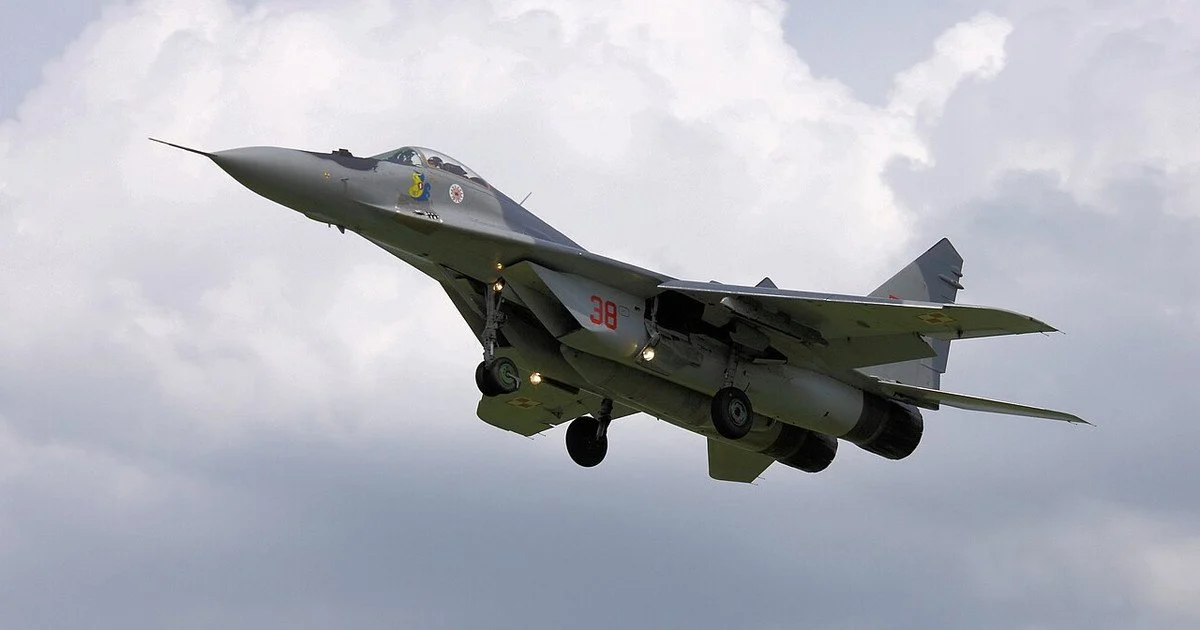
Polish MiG-29 / © Wikipedia
Negotiations between Kyiv and Warsaw regarding the transfer of Polish MiG-29 fighter jets have reached an impasse, with public statements from Polish high-ranking officials obscuring the actual technical condition of the aircraft and disagreements in the arrangements.
This is according to the Polish publication Onet.
In recent weeks, the issue of MiG-29 fighter jets, which remain in the Polish Air Force’s inventory, has resurfaced. Warsaw publicly accused Ukraine of refusing to share advanced drone technologies in exchange for aviation.
It has emerged that behind the political disputes over “exchanging aircraft for Ukrainian drone technology” lies the simple unsuitability of the equipment for safe flight without substantial investment.
According to the publication, after inspecting the Soviet-era fighters, Ukrainian delegations concluded that their technical condition was so poor that they were willing to accept them only on the condition that Poland would modernize the aircraft at its own expense.
“We could not agree to that,” a source connected to the Polish government told Onet.
The problem is that these aircraft, currently stationed at the 22nd tactical airbase in Malbork, have not been modernized for years, as Poland is gradually replacing them with new equipment: F-16s, FA-50s, and F-35s.
Ukrainian experts assessed the fighter jets as significantly worn out. The poor condition of the landing gear was of particular concern. They expressed readiness to accept the Polish aircraft but set a condition: first, the aircraft must undergo major overhaul and modernization at the Polish Military Aviation Works in Bydgoszcz. The Polish side was expected to bear the costs.
“After the full-scale war began, the Ukrainians started repairing and modernizing their MiGs at factories in Bydgoszcz. They paid for these services from their own budget. This time, they wanted our government to pay for it,” says a source linked to the Polish arms industry.
For the Polish Ministry of National Defence, Kyiv’s demands were unacceptable, as modernizing the Soviet-era machines would incur enormous expenses, and Ukraine offered nothing in return.
“When Poland refused to finance this work, the Ukrainians lost interest in our MiGs,” claims an Onet source. A similar statement was also confirmed by a source from the Ministry of Defence.
Only when questions began to arise in the public sphere about when Poland would transfer MiGs to Ukraine did the Polish government decide to link this issue to the problem of a lack of technological transfer from Ukraine.
Onet’s interlocutors emphasize that Ukrainians are still interested in acquiring Polish fighter jets. However, during negotiations, the Ukrainian side allegedly “played hardball, setting tough, complex conditions.” Meanwhile, the Polish side could not specify what exactly it expected in return.
“Drone technology is such a broad concept that anything can be woven into it. The problem is that the Polish Ministry of National Defence could not discuss specifics, so the Ukrainians refused to participate. It’s a festival of incompetence. Unfortunately, politics has interfered in the picture from both sides, causing a lot of damage,” says a source for the publication.
The publication’s interlocutor notes that relations between the two countries are currently so strained that even if Poland did not need some equipment and it would be better to give it to Ukraine, it would not do so for free.
According to Polish military officials, although negotiations on transferring MiGs to Ukraine have stalled, the issue has not been dropped. Firstly, these aircraft, if modernized, would have real value for the Ukrainian armed forces.
Secondly, if they do not reach Ukraine, Poland will soon have to decide what to do with them: how to preserve them and where to put them. “Soon, this equipment will become practically irreparable,” says a Polish Air Force pilot.
The publication reminds that in 2023, Poland transferred 11 combat MiGs and three aircraft intended for use as spare parts to Ukraine. Slovakia, in turn, transferred ten of its fighter jets to Ukraine. Ukraine had over 20 of its own aircraft. This means the Ukrainian Air Force currently has less than three full squadrons of MiG-29 fighters.
We remind you that Poland is decommissioning MiG-29 fighter jets **that it planned to transfer to Ukraine.**
Poland stated that it was supposed to receive drone technology from the Ukrainians in exchange for the aircraft. However, the deal has, at least for now, fallen through. Poland’s Minister of National Defence, Władysław Kosiniak-Kamysz, **blames Ukraine.**
The news about the cancellation of the deal and the subsequent decommissioning of fighter jets that Poland had promised to transfer to Ukraine caused a lively discussion among users of the Threads social network.
In turn, an expert suggested that these decommissioned aircraft could be used as a source of spare parts to maintain the combat readiness of Ukrainian aviation.
Comments Sort: New Old Popular Send
Source: tsn.ua