

Kyiv is aiming to intensify military and psychological pressure on Moscow throughout the summer, hoping to persuade the Kremlin to engage in genuine negotiations.
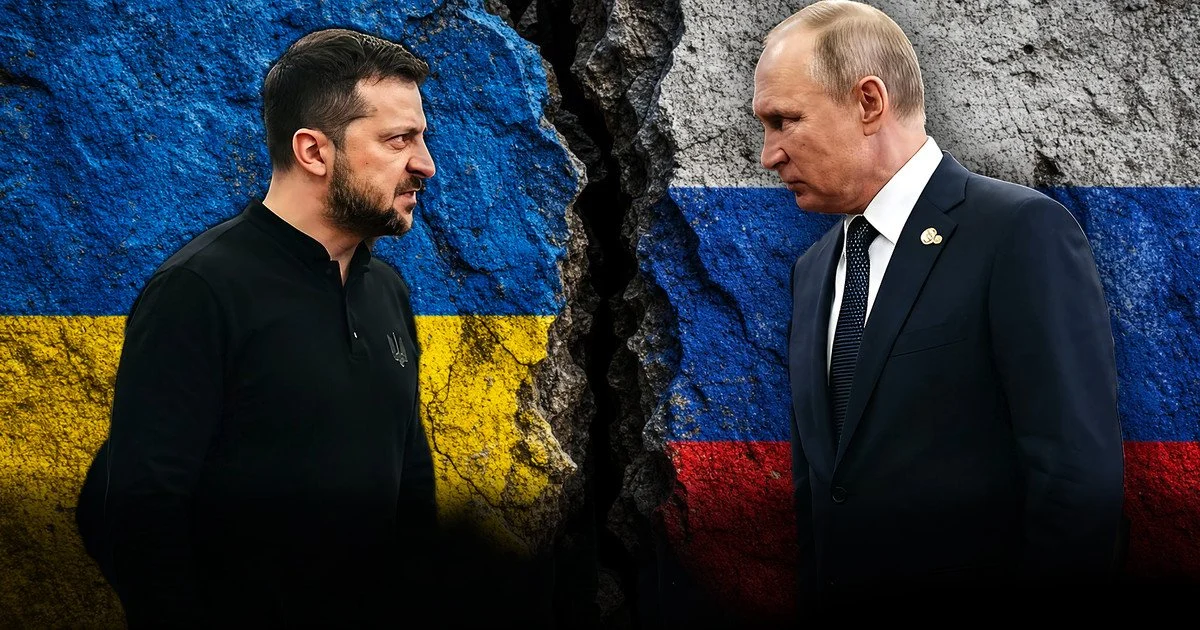
Volodymyr Zelensky and Volodymyr Putin / © TSN
The 40-day campaign of strikes on Russian territory, announced by Ukrainian President Volodymyr Zelensky, is not only a military but also a political strategy intended to compel the Kremlin to enter substantive negotiations by August – precisely when the Russian leadership will decide whether to launch a new autumn-winter offensive.
This is reported by The Economist.
The publication notes that the number 40 holds particular symbolic significance for both Ukrainians and Russians, as, according to tradition, the soul permanently departs the earthly realm on the fortieth day after death.
“When Zelensky announced a new large-scale surge in drone usage, he seemed to be hinting to Vladimir Putin that it was all over for him,” the authors of the material state.
August will be a decisive month
According to journalists, sources close to the Presidential Office explain that the 40-day timeframe set by Zelensky is linked to a potential new round of negotiations.
“Back-channel contacts are expected to transition into more official discussions in August, when the Russian high command will decide whether to initiate an autumn-winter campaign,” The Economist writes.
Therefore, Kyiv is striving to maximize military and psychological pressure on Moscow throughout the summer, hoping to steer the Kremlin towards concrete agreements before strategic decisions on further offensives are made.
Drones are changing the rules of war
The publication emphasizes that Ukraine’s drone campaign has already significantly impacted Russian logistics and military infrastructure.
Specifically, strikes on oil refineries have led to fuel shortages in several Russian regions, and attacks on transport routes to occupied Crimea have seriously complicated the resupply of Russian forces on the peninsula.
Major Yevhen Karas, commander of the 413th Drone Systems Regiment, stated that the turning point was the mass destruction of Russian air defense systems.
“The moment we realized we had a chance came when we saw the sheer volume of air defense systems we were destroying,” he said.
According to Ukrainian data, over 70 Russian air defense systems have been neutralized in recent months.
Crimea remains the primary target
One of the key objectives of the campaign is to isolate Crimea and disrupt its logistical connections with Russia.
However, even Ukrainian military personnel admit that completely cutting off the peninsula has not yet been achieved.
“Consider it more of a defensive plan rather than a victory plan,” stated Dmytro Pletenchuk, spokesman for the Ukrainian Navy.
The main goal of the operation is to create persistent challenges for the large Russian military contingent stationed in Crimea and to increase the cost of continuing the war for Moscow.
Without negotiations, the war will drag on into winter
The Economist highlights that August could be a pivotal moment for the entire campaign.
If the pressure on Crimea and Russian logistics does not compel the Kremlin to agree to serious negotiations, the conflict will likely enter a new phase with another autumn-winter offensive by the Russian Federation and massive strikes on Ukraine’s energy infrastructure.
“The 40-day deadline doesn’t change much directly on the battlefield. But it’s a crucial tool in cognitive warfare,” the publication quotes a source involved in drone operations in Crimea.
According to the authors of the material, Ukraine is attempting not only to alter the military situation but also to project an image of a party dictating the agenda and forcing the adversary to react to its actions. This is why Zelensky’s announced 40-day campaign is viewed as an effort to achieve actual negotiations before August – before the Kremlin makes decisions regarding a new major offensive operation.
As a reminder, on June 25, Ukrainian President Volodymyr Zelensky, during a meeting with SBU Chief Major General Yevhen Hmara, approved a 40-day influence operation against the aggressor state, aimed at compelling Russia to end the war.
Comments Sort: New Old Popular Send
Source: tsn.ua