

The aspirations of colonizing Mars and the Moon could be hindered by the biological limitations of the human body.
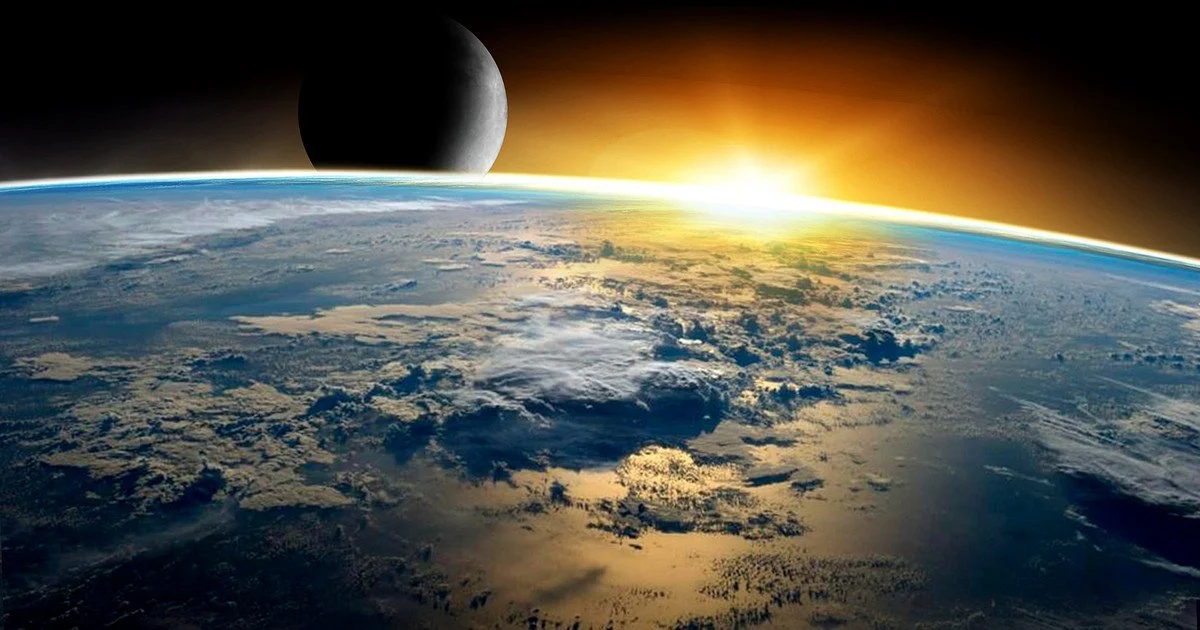
Всесвіт / © Pixabay
Humanity’s plans for establishing long-term settlements on the Moon and Mars are under threat. New research suggests that in conditions of weightlessness, the chances of successful fertilization are practically non-existent. Microgravity not only disorients cells but also obstructs embryonic development.
This is reported by Live science.
A team of scientists from the University of Adelaide conducted a series of experiments on human, mouse, and pig cells. To simulate space conditions, a clinostat was used – a device that constantly rotates samples, preventing cells from stabilizing. Under these conditions, sperm were placed in special labyrinths mimicking the reproductive tract. The results proved disappointing.
Senior author of the study, Nicole McPherson, explained that many proteins in sperm act as molecular sensors of physical forces.
“If you remove the force of gravity, it is logical to assume that these sensors will activate, impairing the ability of sperm to orient and move,” McPherson noted.
Even the addition of the hormone progesterone, which on Earth helps cells find their way to the egg, did not significantly rectify the situation. For even a slight effect in space, doses that could be hazardous to the organism would be required.
Fertilization Failure and Developmental Delays
Animal experiments revealed even more alarming figures. Under simulated microgravity conditions, the probability of successful fertilization in mice dropped by 30%, and in pigs – by 15%. Those embryos that did manage to form demonstrated severe developmental delays.
According to the researchers, gravity is critically important not only for the meeting of sperm and egg but also for the subsequent implantation of the embryo into the uterine wall.
“Embryonic cells must organize correctly to form all the body’s organs. Microgravity can disrupt any of these stages, or all of them at once,” emphasized McPherson.
Future Beyond Earth in Question
The obtained results have profound implications for long-term space exploration strategies. If humans cannot reproduce beyond Earth’s atmosphere, the creation of self-sustaining civilizations on other planets will be impossible. Currently, scientists are treating astronauts as test subjects, as the impact of prolonged orbital stays on the human reproductive system has been studied only superficially.
Nicole McPherson highlights that this knowledge also helps to better understand life on our own planet.
“Gravity is not merely a backdrop for life; it is deeply ingrained in the biological processes that create it,” the researcher concluded.
Scientists continue to investigate whether there are ways for biological adaptation to weightlessness, but as of today, the scientific answer is unequivocal: without terrestrial gravity, procreation is impossible.
Mars Colonization “Postponed”
We remind you that an international group of researchers concluded that the presence of liquid water on exoplanets does not guarantee the existence of life.
According to the study’s findings, phosphorus and nitrogen also play a crucial role in the formation of living organisms. These elements are responsible for cellular energy processes and DNA formation.
As planetary scientist Craig Walton explained, liquid water is only a basic prerequisite for life, but it is not sufficient. He stated that even the presence of oceans does not mean life is possible on a planet if the necessary chemical elements are absent.
Researchers modeled planet formation processes and found that in the early stages, elements undergo “sorting”: heavy elements sink towards the core, while lighter ones remain closer to the surface. Oxygen plays an important role in this process.
If there is insufficient oxygen, phosphorus binds with heavy elements and sinks into the core. If there is too much oxygen, phosphorus remains accessible, but then nitrogen can be lost to the atmosphere and dissipate into space.
Thus, the formation of conditions suitable for life depends on a very delicate balance of chemical elements, which, according to scientists’ estimates, is a rare phenomenon. Scientists hypothesize that precisely such a balance exists on Earth, making it unique among known planets and potentially habitable.
Source: tsn.ua